Introduction
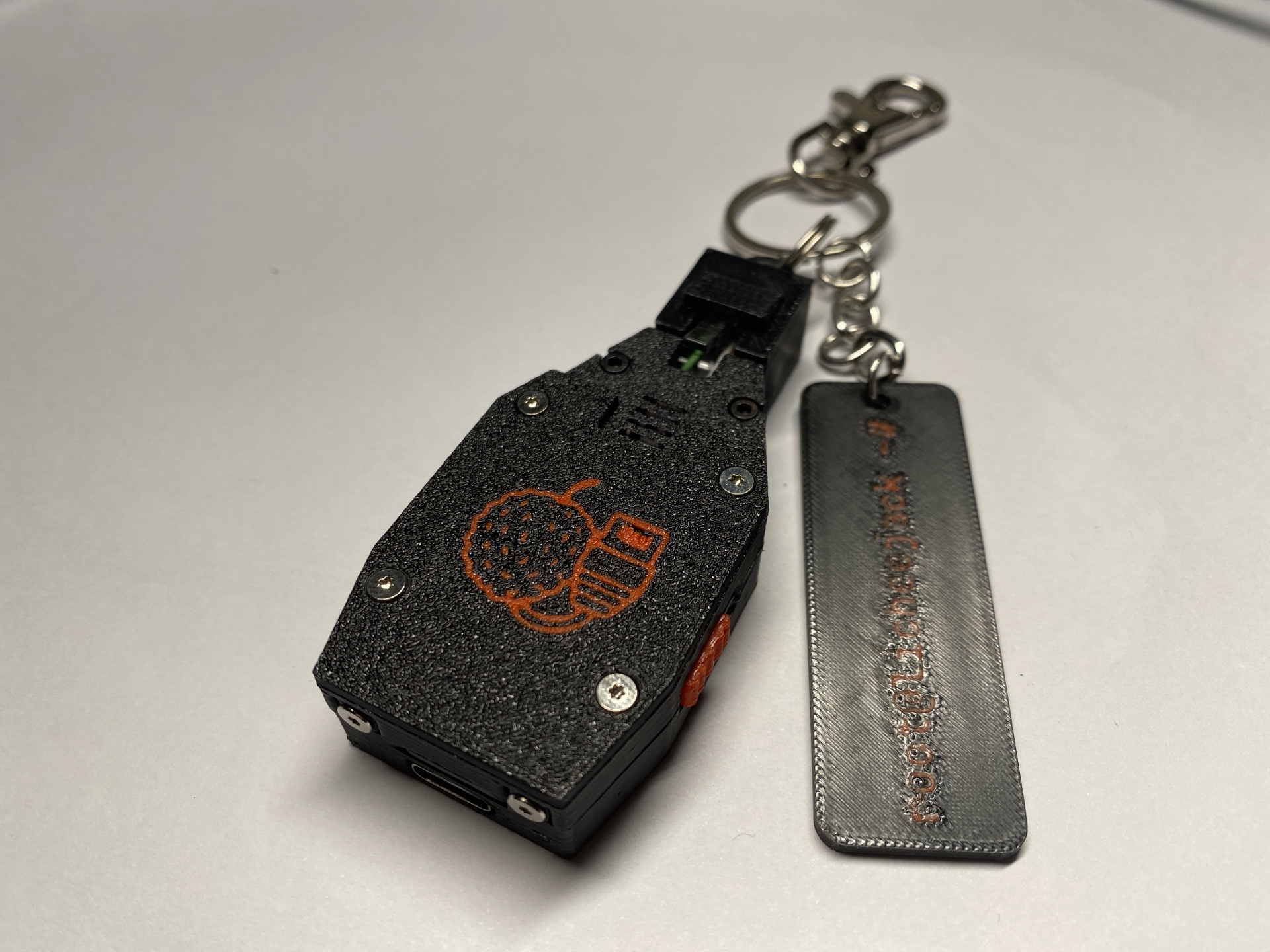
Lichee-Jack is a low-cost, fully open-source, DIY LAN attack & penetration-testing gadget, inspired by tools like the Hak5 Shark Jack, but redesigned from the ground up for RISC-V, Linux, and hackability-first principles.
It is built around the Sipeed LicheeRV Nano (SG2002, RISC-V) platform and runs a custom Debian GNU/Linux system, turning a tiny Ethernet-connected device into a powerful social-engineering and post-exploitation assistant.
Lichee-Jack is not a clone of Shark Jack. It is an independent open-source project, focusing on:
- Transparency over black-box firmware
- Linux-native workflows
- DIY hardware and reproducible builds
- Community-driven development
Why Lichee-Jack?
Many commercial penetration-testing gadgets are:
- Closed-source
- Expensive
- Difficult to customize at a low level
- Locked to vendor ecosystems
Lichee-Jack aims to be the opposite:
- Fully open-source (software, hardware, PCB, 3D models)
- Low-cost and accessible to students, makers, and researchers
- Real Linux system, not a stripped-down RTOS
- Hackable by design, from bootloader to payload scripts
If you are comfortable with Linux, shell scripts, networking, and embedded devices, Lichee-Jack is meant for you.
Hardware Overview
- SoC: SG2002 (RISC-V)
- Board: Sipeed LicheeRV Nano
- Ethernet: 10/100 Mbps onboard GMAC
- USB: USB 2.0 device (USB gadget mode)
- Storage: microSD
- Power: USB-powered
- Form factor: Compact, pocket-sized
The hardware design, PCB files, and accessories are all released as open hardware.
Software Stack
Lichee-Jack runs a custom Debian GNU/Linux (stable) image with:
- Custom bootloader (DAS U-Boot)
- Minimal kernel configuration
- Systemd init system
- Modular startup services
- Payload-driven execution model
USB Gadget Functions
Powered by gt (linux-usb-gadgets), Lichee-Jack supports:
- CDC-ECM
- RNDIS
- HID
- Mass Storage (payload-dependent)
The USB role is dynamically switched based on hardware mode and payload logic.
Core Concept: Payload-Driven Attacks
Lichee-Jack operates using payload scripts, similar in spirit to BashBunny or Shark Jack, but with fewer restrictions.
Payloads can:
- Scan and fingerprint local networks
- Perform ARP, DHCP, or DNS-based attacks
- Act as a USB Ethernet or HID device
- Exfiltrate data over LAN or USB
- Control LEDs and system behavior
Because it is a full Linux system, payloads are just shell scripts, Python, or native binaries.
LEDs, Shared Memory & Daemons
Lichee-Jack includes lightweight system daemons such as:
shmled– shared-memory LED controllerjackstart– core system control logic- Optional networking and utility services
These components communicate via shared memory, allowing fast state updates without heavy IPC overhead.
DIY-Friendly by Design
This project is intentionally designed for:
- Makers
- Students
- Security researchers
- Open-source contributors
You can:
- Build the system image from source
- Modify kernel configs
- Add your own daemons
- Design your own enclosure
- Manufacture PCBs independently
Even partial builds (software-only or hardware-only) are supported.
Licensing & Open Source
Lichee-Jack is a fully open-source project:
- Software: GPLv3
- PCB & hardware design: GPLv3
- 3D models / STL: CC-BY-SA 4.0
This ensures that all derivatives remain open and community-friendly.
Legal & Ethical Notice
Lichee-Jack is intended only for legal security testing, education, and research.
You are responsible for:
- Obtaining proper authorization
- Complying with local laws
- Using this device ethically
The author and contributors take no responsibility for misuse.
Project Status
- Active development
- System images available
- Features evolving rapidly
- Contributions welcome
Sales and distribution are still being prepared. This remains a community-first open-source project.
Learn More
- GitHub: KaliAssistant/Lichee-Jack
- Documentation: Lichee-Jack Wiki
- Inspiration (not affiliation): Hak5 Shark Jack
If you love Linux, open hardware, and hands-on security research — welcome aboard.