RGB LED
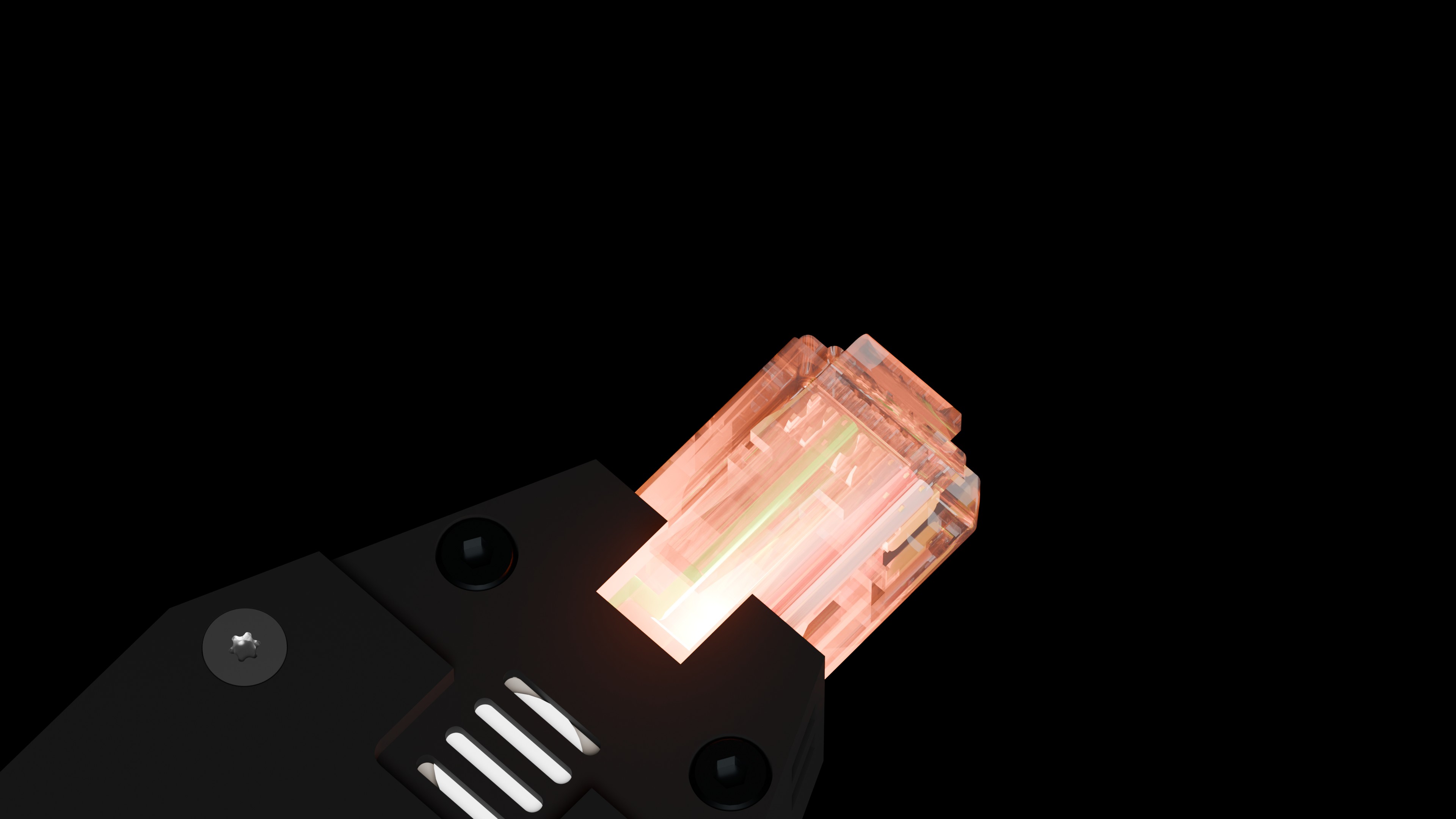
Lichee-Jack uses a side‑view SMT WS2812B 4020 full‑color RGB LED (24‑bit). Only one GPIO is required to drive the LED by generating a ~800 kHz–1 MHz single‑wire pulse waveform.
Background & Design Mistakes
At the beginning of the project, I referenced the SiPeed official Lichee‑RV Nano GPIO pinout and noticed that GPIOA‑25 was labeled as “SPI4 MOSI”. My initial assumption was:
WS2812B might be driven using SPI bit‑banging (3‑bit encoding mode).
However, I made two critical mistakes:
- I did not verify the SG2002 SoC datasheet.
- On LicheeRV Nano, the so‑called SPI4 does not physically exist.
In reality:
- “SPI4” only exists as a GPIO‑bitbanged SPI node in the Device Tree.
- There is no real SPI controller behind it.
So what I was actually attempting was:
GPIO‑bitbang → fake SPI → bitbang WS2812B
This was unnecessarily complex and fundamentally wrong.
Realization
While debugging, I remembered an old Arduino project where an ATmega328P drove WS2812B purely by GPIO bit‑banging — no SPI, no peripherals.
That was the key insight:
WS2812B only needs precise timing, not SPI.
So the correct solution was simply:
Direct GPIO bit‑banging with accurate delays
First Attempt: Userspace GPIO (Failure)
I first wrote a userspace C test program to toggle GPIO directly.
Results:
- LED only showed solid white
- CPU usage stuck at 100%
Why?
Because I was doing this:
- Using
__asm__("nop")busy‑loops - In userspace
Yes…
Userspace.
USERSpace.
USERSPACEEEEEE.
This approach is fundamentally broken:
- Scheduler preemption destroys timing
- Busy‑waiting wastes CPU
- No deterministic waveform
Second Attempt: Kernel Module (Also Bad)
Next, I moved the waveform generation into a kernel module.
Observations:
- Oscilloscope showed a stable ~1.2 MHz waveform
- WS2812B timing looked correct
But…
- The kernel stopped responding
- System became unresponsive
The reason was obvious in hindsight:
- I was still using
ndelay() - Inside tight loops
- Blocking the kernel for too long
Just because you can run code in kernel space doesn’t mean you should.
Final Working Architecture
The breakthrough came from understanding one important WS2812B behavior:
WS2812B latches (locks) its color when no signal is present.
Final Strategy
-
Kernel space
- Generate WS2812B waveform using
ndelay() - Only during short burst transmissions
- Generate WS2812B waveform using
-
Frame timing
- Use
usleep_range()between frames - Avoid long kernel blocking
- Use
-
Shared Memory Interface
-
Import existing SHM logic
-
Expose a clean userspace control node:
/dev/ws2812b
-
-
Userspace
- Write RGB data into shared memory
- Kernel handles precise timing safely
Pseudo Code Overview
/**
 * ws2812b_send_led - Transmit a single LED color frame
 * @g: Green value (0–255)
 * @r: Red value (0–255)
 * @b: Blue value (0–255)
 *
 * Sends a 24-bit GRB sequence to the LED using precise timing with
 * interrupts and preemption disabled.
 */
static void ws2812b_send_led(uint8_t g, uint8_t r, uint8_t b)
{
    int i, c;
    uint8_t colors[3] = { g, r, b };

    local_irq_disable();
    preempt_disable();

    /* Must clear gpio here*/
    gpio_clear();
    ndelay(T1H);

    for (c = 0; c < 3; c++) {
        uint8_t byte = colors[c];
        for (i = 7; i >= 0; i--) {
            if (byte & (1 << i)) {
                gpio_set();
                ndelay(T1H);
                gpio_clear();
                ndelay(T1L);
            } else {
                gpio_set();
                ndelay(T0H);
                gpio_clear();
                ndelay(T0L);
            }
        }
    }

    preempt_enable();
    local_irq_enable();
}


/**
 * ws_thread_fn - Kernel thread to refresh LED data
 * @data: unused
 *
 * Periodically transmits the framebuffer contents to all LEDs at ~30 FPS.
 *
 * Return: always 0
 */
static int ws_thread_fn(void *data)
{
    while (!kthread_should_stop()) {
        int i;
        for (i = 0; i < LED_COUNT; i++) {
            ws2812b_send_led(framebuf[i*3 + 0], framebuf[i*3 + 1], framebuf[i*3 + 2]);
        }
        usleep_range(KTHR_USLEEP_MIN, KTHR_USLEEP_MAX);
    }
    return 0;
}
Result
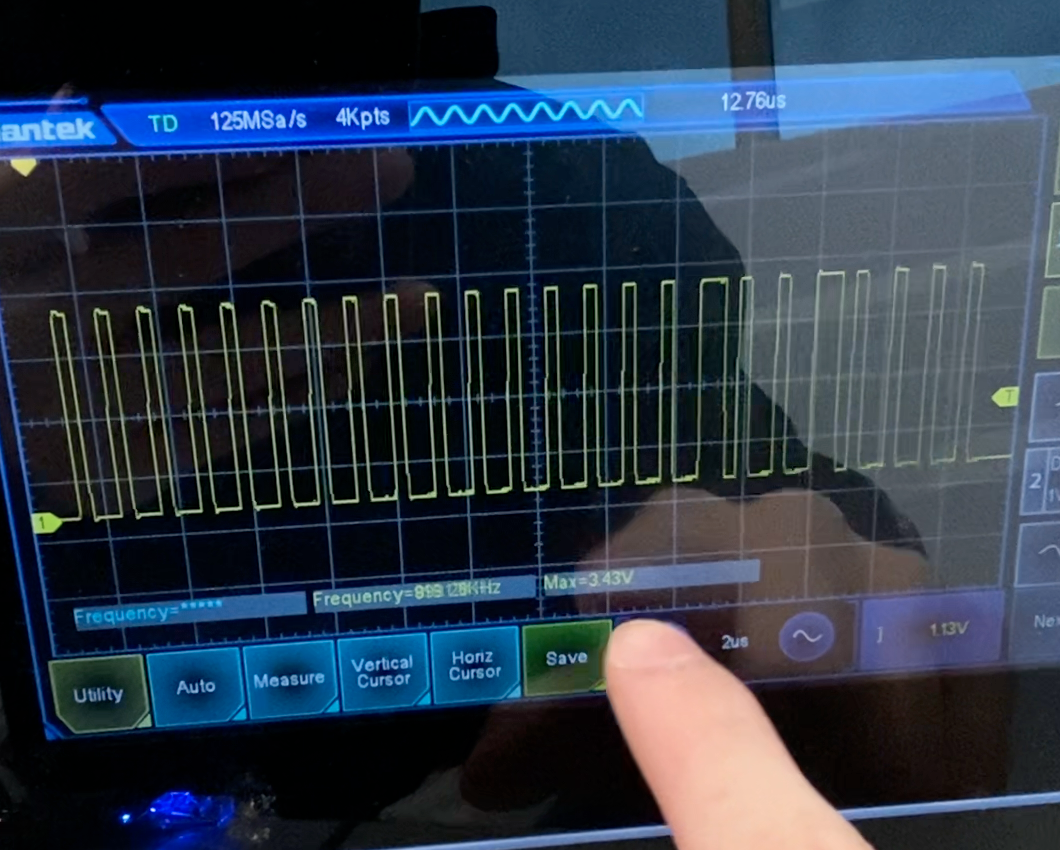
- Stable WS2812B control
- Correct colors
- No CPU 100% lock
- Kernel remains responsive
- Clean userspace API
Lessons Learned
- Always verify the SoC datasheet — pinout diagrams can lie
- WS2812B does not require SPI
- Userspace timing ≠ real‑time
- Kernel space must be used carefully and briefly
- Latching behavior of WS2812B is your friend
This RGB LED subsystem is now fully integrated into the Lichee‑Jack platform and exposed cleanly for higher‑level applications.